Court Layout Designs That Dictate Integration Patterns for Retrieval Aids and Delivery Units Across Multi-Surface Tennis Sites
Geschrieben von Leon Meier · 8.11.2026
Court Layout Designs That Dictate Integration Patterns for Retrieval Aids and Delivery Units Across Multi-Surface Tennis Sites
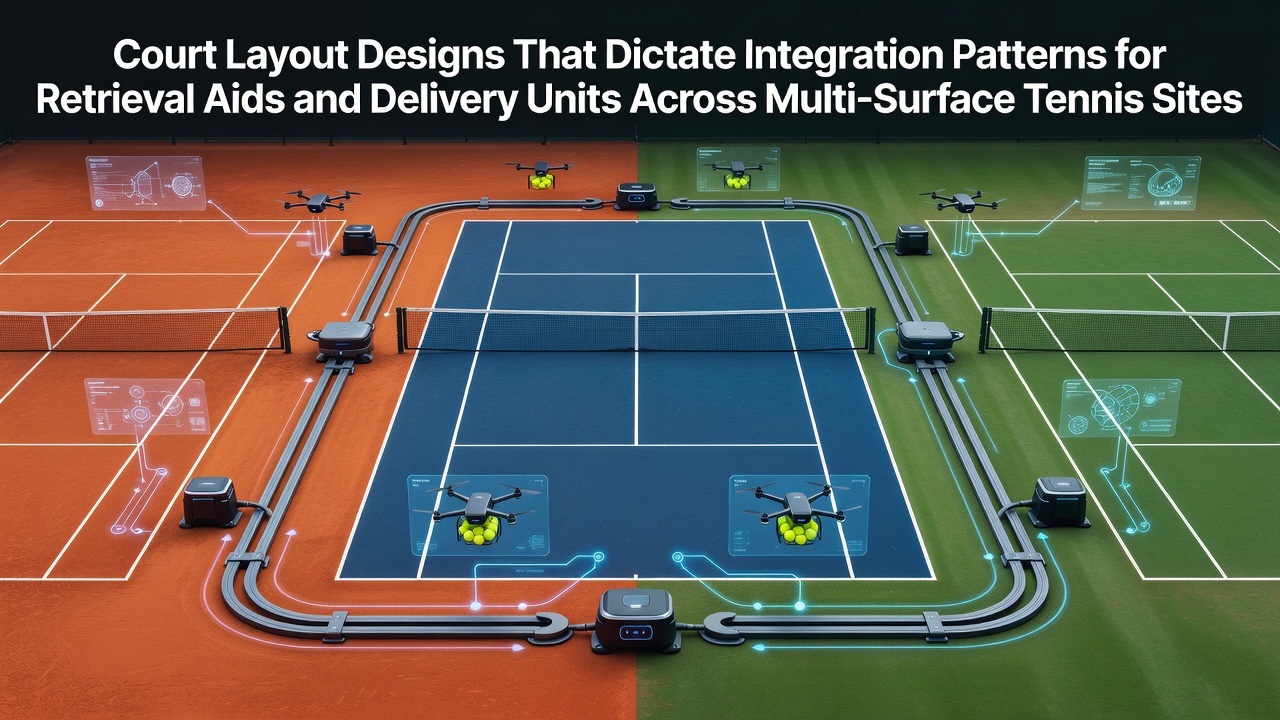
Multi-surface tennis sites combine hard courts, clay surfaces, and grass areas within single facilities, and these combinations create specific spatial constraints that shape how retrieval aids and delivery units connect to one another. Observers note that operators must map court perimeters, transition zones, and service corridors before placing ball collection systems or automated delivery machines, because misalignment at any boundary reduces operational flow across an entire complex.
Facilities with adjacent hard and clay courts often position retrieval units along the longer perimeter edges where surface changes create natural collection channels, while delivery units sit closer to the baselines of the harder surfaces to maintain consistent launch angles. Data from facility audits shows that this pattern emerges because clay tends to retain balls longer during retrieval cycles, which forces operators to adjust spacing so that delivery mechanisms can reload without crossing inconsistent traction zones.
Layout Geometry and Equipment Placement Rules
Rectangular court groupings produce linear integration corridors that allow retrieval aids to feed directly into delivery units through shared side alleys, whereas clustered or L-shaped arrangements require intermediate transfer points where balls move between surfaces. Researchers have documented that these intermediate points must account for elevation changes of as little as two centimeters, since even minor grade shifts alter the trajectory consistency of delivery units when they serve balls back onto clay versus hard courts.
Designs that incorporate central service buildings between court banks tend to centralize retrieval collection at those buildings, which then feed outward to individual delivery stations on each surface type. This configuration reduces duplicate transport paths but demands precise timing synchronization so that units operating on faster hard courts do not outpace slower retrieval cycles on clay. In November 2026, revised facility guidelines from the International Tennis Federation are expected to formalize minimum corridor widths that support such synchronized flows at multi-surface venues.
Transition Zones Between Surfaces
Where grass meets hard courts, operators frequently install low-profile retrieval guides that follow the natural drainage slopes already present, allowing balls to roll toward collection points without additional mechanical assistance. Delivery units in these zones often mount on modular bases that operators can reposition seasonally because grass growth rates change the effective court dimensions over time. Studies conducted by sports engineering teams at the University of Melbourne indicate that repositioning intervals of eight to ten weeks maintain launch accuracy when grass heights vary between 8 and 12 millimeters.
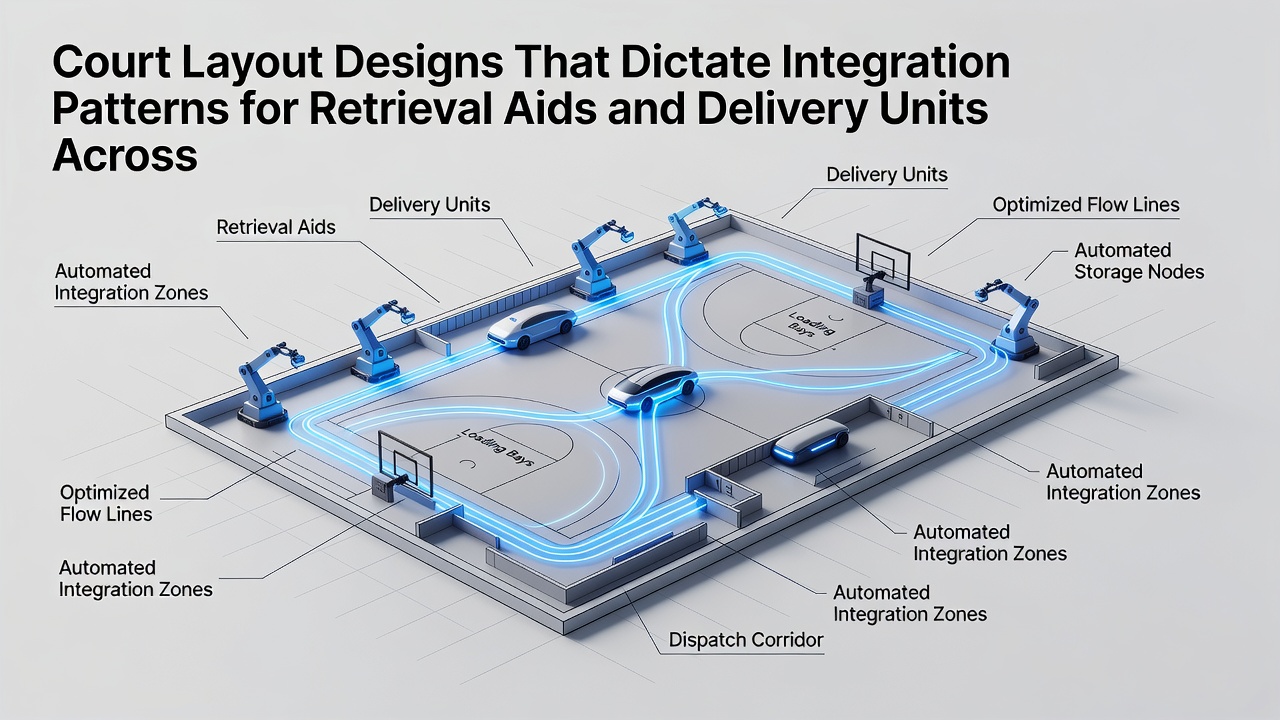
Clay-to-hard transitions create different demands because clay particles can migrate onto adjacent hard courts and affect ball bounce consistency. Retrieval aids placed at these borders incorporate finer mesh screens that separate debris before balls reach delivery mechanisms, and operators route the cleaned balls through enclosed transfer tubes that span the surface boundary. This prevents contamination while preserving the integration pattern that lets one retrieval cycle supply multiple delivery units across both surfaces.
Operational Data and Pattern Consistency
Records maintained by large municipal tennis complexes reveal that sites using mirrored court layouts achieve higher integration efficiency because retrieval paths on one side mirror those on the opposite side, which simplifies spare-parts inventories for both retrieval and delivery equipment. Non-mirrored designs, by contrast, require custom adapters at each unique junction, increasing the number of compatibility checks operators perform during routine maintenance cycles.
Facilities that separate player circulation paths from equipment corridors report fewer interruptions during peak hours, since retrieval aids and delivery units can operate without crossing pedestrian routes. This separation becomes especially relevant at complexes that host simultaneous training sessions on different surfaces, where timing between retrieval and delivery cycles must remain independent yet coordinated through a single control interface.
Conclusion
Court layout designs establish the physical framework within which retrieval aids and delivery units achieve functional integration at multi-surface tennis sites. The geometry of court groupings, the treatment of surface transition zones, and the alignment of service corridors all determine the specific patterns operators follow when installing and maintaining these systems. As facilities prepare for the 2026 guideline updates, attention remains focused on how existing spatial arrangements can accommodate refined integration requirements without requiring complete redesigns of established court banks.