How Ball Collection Tubes Shape Decisions on Net Replacements and Accessory Compatibility in Training Facilities
Geschrieben von Leon Meier · 27.9.2026
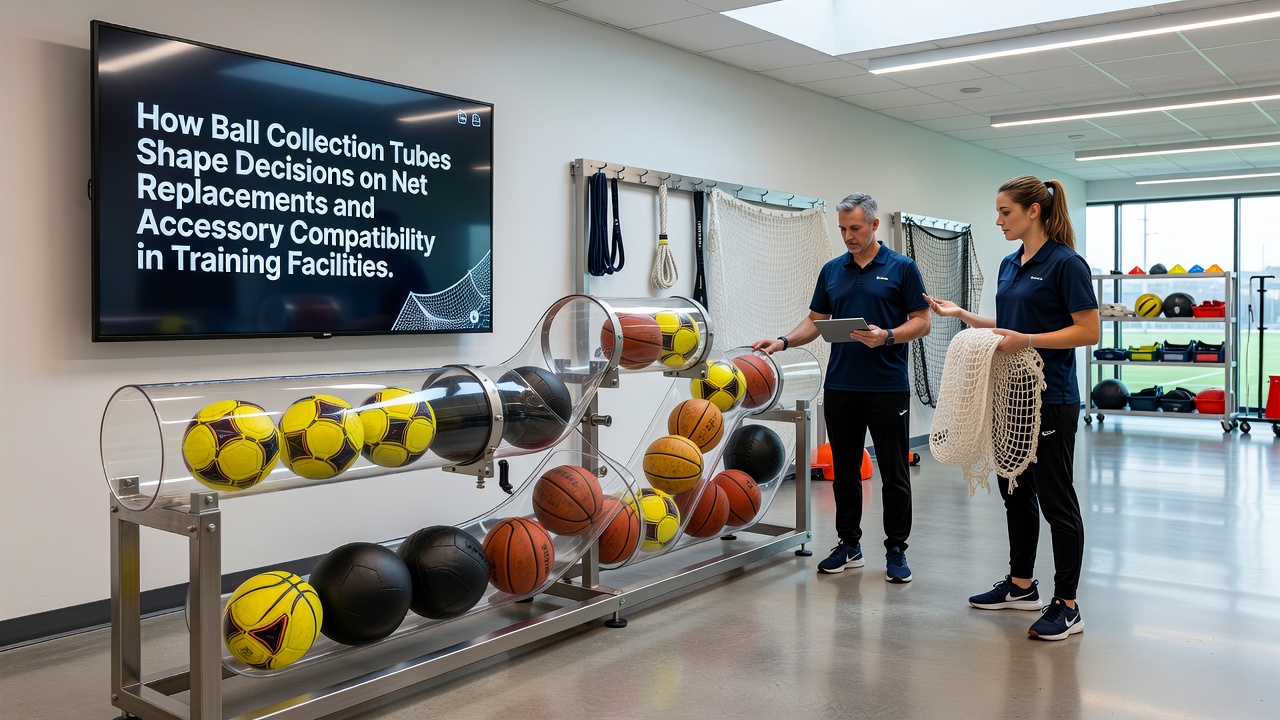
How Ball Collection Tubes Shape Decisions on Net Replacements and Accessory Compatibility in Training Facilities
Ball collection tubes serve as integral components in automated training setups where they transport tennis balls from court surfaces back to storage or machine feeders, and their design dimensions directly influence how facilities approach net replacements while determining which accessories integrate without modification. Facilities that rely on high-volume ball machines often encounter situations where tube diameter, material flexibility, and mounting brackets dictate whether existing nets can remain in service or require full substitution to maintain smooth operation.
Design Specifications and Their Direct Effects on Net Structures
Standard ball collection tubes measure between 75 and 110 millimeters in diameter with wall thicknesses that range from 2 to 4 millimeters depending on the polymer blend used, and these measurements create clearance requirements that affect net height adjustments and post spacing. When a facility installs tubes with reinforced collars for durability under continuous use, technicians frequently discover that the added bulk necessitates repositioning of net posts or selection of nets with wider mesh openings to avoid contact points that accelerate wear. Data from equipment maintenance logs at European training centers show that incompatible tube-to-net interfaces account for approximately 18 percent of unscheduled net replacements within the first two years of operation.
Those who oversee court operations note that tube curvature at collection points must align with net tensioning systems, because misalignment produces repeated friction that frays the lower net band and forces earlier replacement cycles. Manufacturers address this by offering modular adapters, yet facilities report that retrofitting older nets with these adapters succeeds only when the original net fabric meets specific tensile strength thresholds published in industry technical sheets.
Accessory Compatibility Challenges Across Equipment Lines
Training facilities maintain inventories of ball machines, hopper extensions, and automated feeders, and ball collection tubes function as the linking element that determines whether these accessories operate as a unified system or require separate sourcing. A tube designed for one brand of ball machine may feature proprietary locking mechanisms that prevent attachment to a competitor's feeder unit, leading facilities to standardize around single-vendor ecosystems or invest in custom fabrication. Research conducted by sports engineering departments at universities in Australia and Canada indicates that facilities using mixed-brand accessories experience 27 percent higher downtime related to tube interface failures compared with those that maintain uniform product lines.
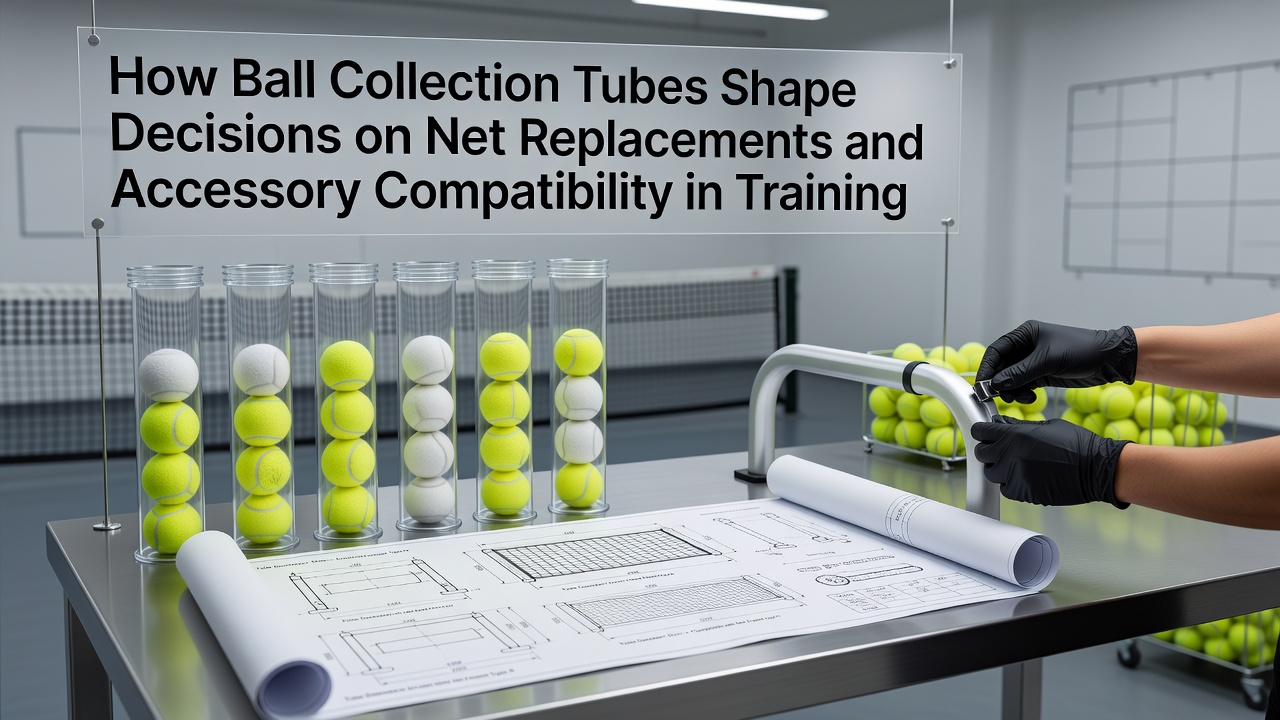
Compatibility extends beyond physical connections to include airflow dynamics when vacuum-assisted tubes are employed, and changes in tube length or bend radius alter suction efficiency which in turn affects how nets must be positioned to prevent ball accumulation zones. Facilities planning expansions therefore evaluate tube specifications before ordering new nets, since accessory upgrades scheduled for September 2026 at several major European centers will introduce updated sensor arrays that require precise tube alignment with net boundaries.
Decision Frameworks Used by Facility Managers
Procurement teams at large training venues apply structured evaluation matrices that weigh tube durability ratings against projected net lifespan, and these matrices incorporate metrics such as abrasion resistance, thermal expansion coefficients, and chemical compatibility with court cleaning agents. When data reveal that a particular tube material degrades net fabric at an accelerated rate, managers shift budget allocations toward nets constructed from higher-denier polyethylene blends even though initial costs rise. According to guidelines issued by the European Committee for Standardization, equipment interfaces in sports facilities should undergo compatibility verification testing prior to bulk purchases to reduce long-term replacement frequency.
One study released by a Canadian research institute examined 42 training centers and found that proactive tube-net compatibility audits reduced net replacement frequency by 31 percent over a three-year period. Facilities that skipped such audits encountered repeated instances where accessory additions forced complete net system overhauls because mounting hardware no longer matched existing post configurations.
Supply Chain Considerations and Standardization Trends
Global suppliers of court equipment now provide configurable tube kits that accommodate multiple net heights and post diameters, and these kits allow facilities to delay net replacements until scheduled maintenance windows rather than reacting to sudden compatibility failures. Standardization efforts led by international sports federations encourage adoption of common tube connection profiles, yet regional variations in court dimensions continue to create exceptions that demand custom solutions. Facilities in North America and the Asia-Pacific region increasingly reference shared technical libraries when selecting components to ensure that future accessory additions will not trigger premature net exchanges.
Conclusion
Ball collection tubes exert measurable influence over net replacement schedules and accessory integration pathways in training facilities through their physical dimensions, material properties, and interface designs. Facilities that incorporate compatibility assessments early in equipment planning reduce unplanned expenditures and maintain consistent operational uptime. As new sensor-equipped systems enter the market in September 2026, the relationship between tube specifications and net systems will remain a central factor in procurement decisions across professional and recreational training environments.