Sourcing Strategies for Durable Parts in High-Volume Court Equipment Maintenance Programs
Geschrieben von Leon Meier · 30.8.2026
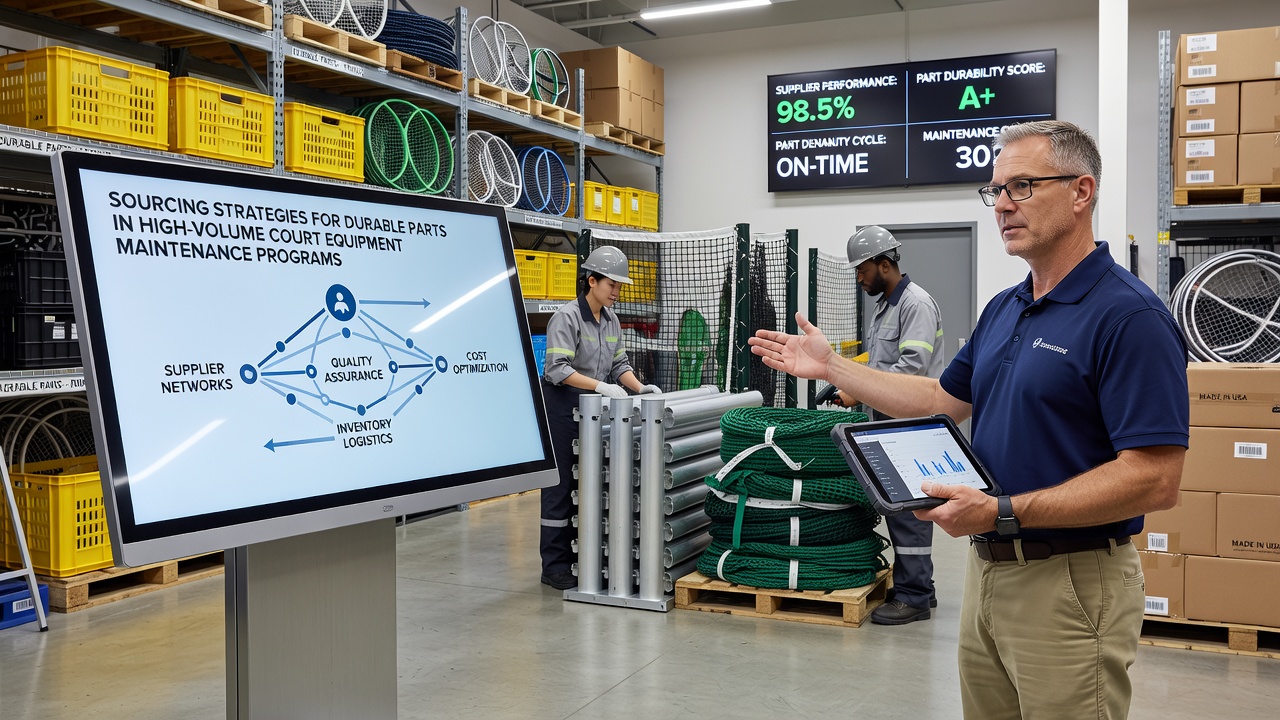
Sourcing Strategies for Durable Parts in High-Volume Court Equipment Maintenance Programs
High-volume court equipment maintenance programs rely on consistent access to durable components for items such as ball launchers, tensioning systems, and surface repair tools, and operators coordinate these efforts through structured procurement approaches that balance cost, availability, and longevity. Facilities managing dozens of courts each day encounter accelerated wear on motors, belts, and structural frames, which prompts teams to evaluate suppliers based on material specifications rather than price alone.
Establishing Supplier Evaluation Criteria
Procurement teams begin by defining measurable standards for part durability, including cycle life ratings, corrosion resistance, and compatibility with existing machinery models. Data from the International Trade Administration supply chain reports shows that organizations using standardized qualification checklists reduce unplanned downtime by aligning purchases with verified performance metrics. Suppliers must demonstrate traceability for raw materials and provide test documentation covering temperature extremes and repetitive load conditions common in outdoor court environments.
Those who manage large-scale programs often segment vendors into tiers based on delivery reliability and after-sales support capabilities, which allows rapid reallocation of orders when primary sources encounter production delays. This tiered structure becomes particularly relevant as new durability standards take effect across multiple jurisdictions in August 2026.
Inventory Management and Multi-Source Approaches
Effective programs combine just-in-time replenishment with strategic stockpiling of critical subassemblies that require longer lead times. Maintenance logs from regional sports complexes indicate that maintaining six-month buffers on high-failure items such as drive gears and sensor modules prevents service interruptions during peak usage periods. At the same time, diversification across at least two certified manufacturers for each component category mitigates risks associated with single-source dependency.
Digital tracking systems integrate with supplier portals to flag potential shortages weeks in advance, enabling preemptive orders without inflating overall inventory costs. Observers note that facilities adopting these combined tactics report steadier operational throughput compared with those relying on reactive purchasing cycles.

Quality Assurance and Certification Requirements
Parts destined for high-volume use undergo incoming inspection protocols that verify dimensional tolerances and material composition against original equipment specifications. Certification bodies such as those referenced in Canadian federal procurement guidelines require third-party validation for load-bearing elements, which helps programs avoid premature failures that disrupt court schedules. Documentation trails must accompany every shipment so technicians can trace any performance issues back to specific production batches.
Long-term contracts frequently incorporate clauses that obligate suppliers to notify buyers of formulation changes or process updates at least 90 days prior to implementation. This advance notice allows maintenance teams to conduct compatibility testing before widespread rollout, preserving equipment reliability across entire facility networks.
Regional Sourcing Considerations and Regulatory Alignment
Programs operating across borders must account for varying environmental and safety regulations that influence acceptable material compositions. European Union directives on restricted substances, for example, shape the selection of lubricants and coatings used in outdoor machinery. Coordination with local distributors familiar with these rules streamlines compliance while maintaining access to equivalent components that meet performance thresholds.
August 2026 will bring updated labeling requirements for certain mechanical assemblies in several markets, prompting current sourcing reviews to ensure uninterrupted supply once those rules activate. Teams that map regulatory timelines into their procurement calendars avoid last-minute substitutions that could compromise part quality.
Performance Monitoring and Continuous Improvement
Maintenance records feed into analytics platforms that correlate part lifespan with specific usage patterns and environmental exposures. Aggregated data reveals which sourcing decisions deliver the lowest total cost of ownership over multi-year periods. Facilities that close feedback loops between technicians and procurement staff refine their approved vendor lists more effectively than those treating sourcing as a static annual exercise.
Conclusion
Structured sourcing strategies for durable parts support reliable operation of high-volume court equipment maintenance programs by combining rigorous supplier qualification, diversified supply chains, and ongoing performance tracking. As regulatory milestones approach in August 2026, programs that integrate these elements position themselves to sustain service levels without compromising component integrity or budget predictability.