The Interconnected Supply Web Behind Durable Court Practice Systems and Their Essential Replacements
Geschrieben von Uma Carter · 13.9.2026
The Interconnected Supply Web Behind Durable Court Practice Systems and Their Essential Replacements
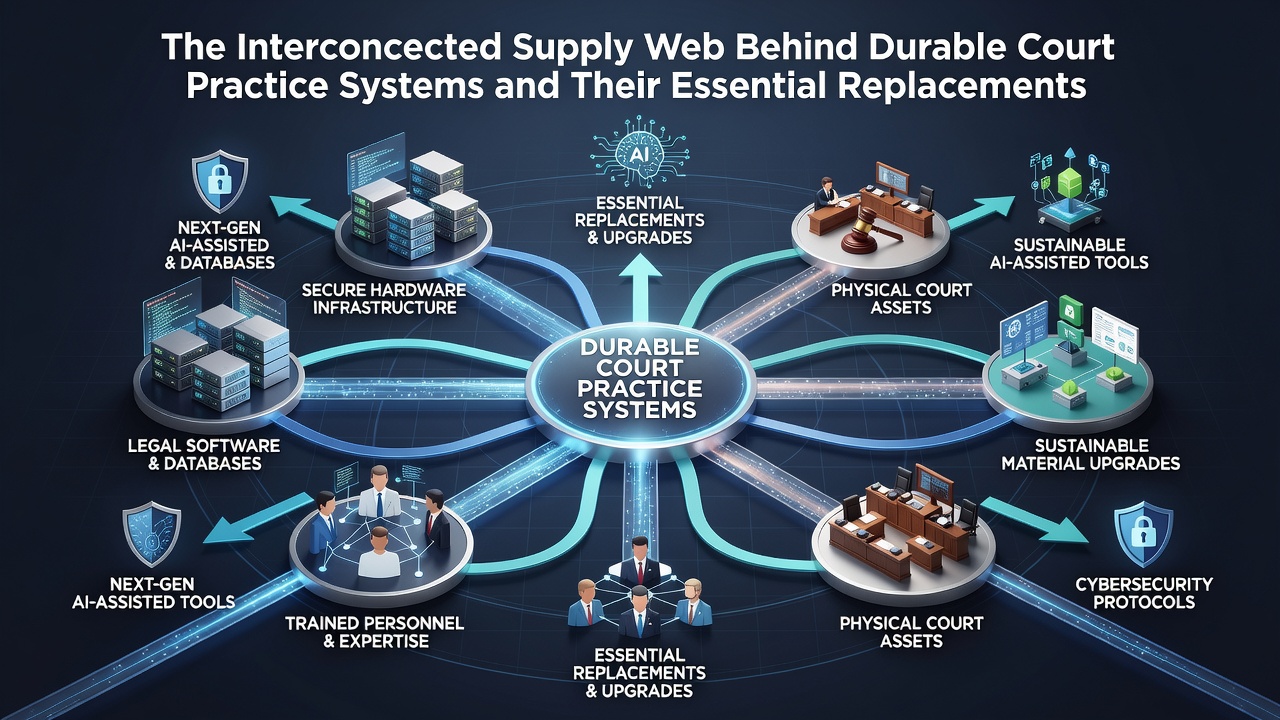
Supply networks for durable court practice systems stretch across multiple continents and involve raw material extraction, component manufacturing, and distribution channels that support tennis courts, training facilities, and similar athletic venues. These systems rely on specialized parts such as reinforced netting, automated ball launchers, and surface maintenance equipment, each drawn from suppliers who coordinate through established logistics routes. Data from manufacturing reports show that primary materials including high-tensile polymers and corrosion-resistant metals move through processing hubs in Asia, Europe, and North America before reaching assembly points.
Core Components and Material Flows
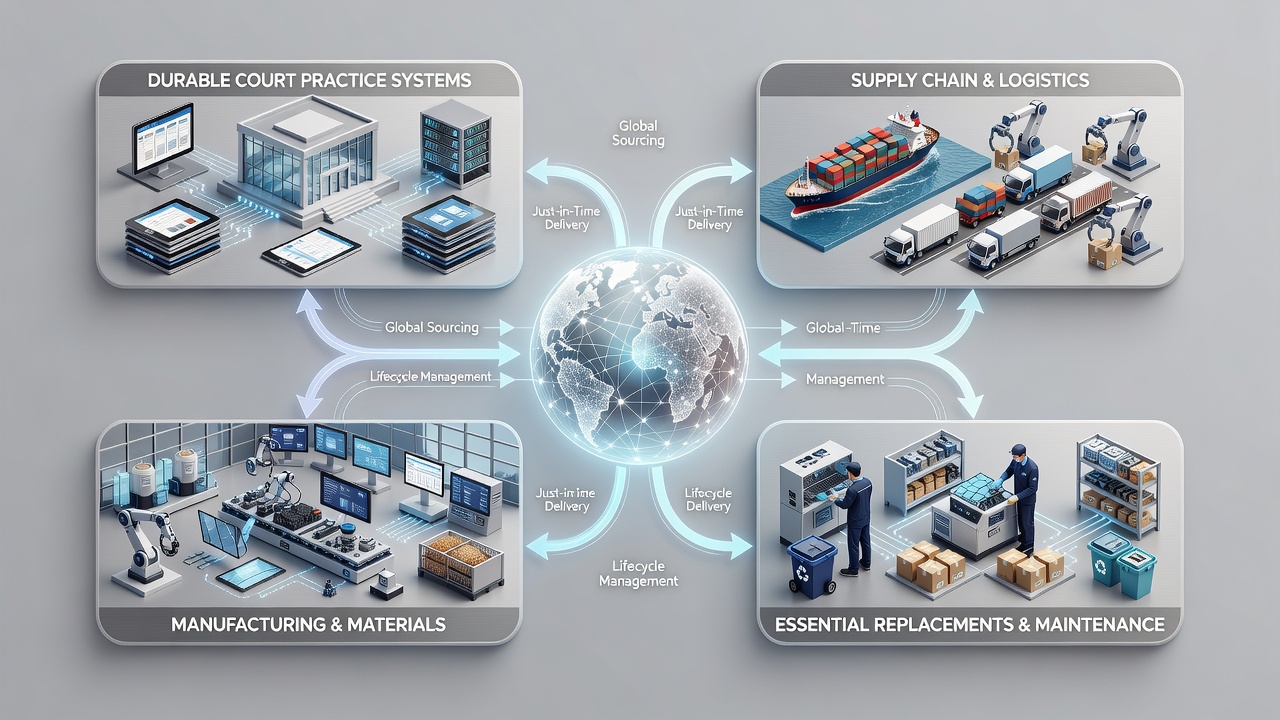
Manufacturers source aluminum alloys and synthetic fibers from mining operations and chemical plants, then route them to fabricators who produce frames, tensioning mechanisms, and sensor modules. Observers note that these flows depend on just-in-time delivery agreements, which keep inventory costs low while exposing operations to delays when shipping lanes face interruptions. Research from industry databases indicates that a single ball machine assembly can incorporate over 200 distinct parts, many of which originate in facilities that also serve automotive and aerospace sectors.
Replacement cycles for high-wear items follow patterns documented in maintenance logs at large facilities, where nets require substitution every 18 to 36 months depending on usage volume. Essential replacements include drive belts, motor brushes, and electronic control boards, items that travel through secondary supply tiers after initial production. Figures from equipment distributors reveal consistent demand spikes during peak training seasons, prompting distributors to maintain regional stockpiles in key markets.
Global Coordination and Logistics Networks
Logistics providers manage container shipments that connect Southeast Asian extrusion plants with European finishing workshops and North American distribution centers. Customs documentation and compliance checks add layers of coordination, especially for items containing electronic components subject to export controls. According to trade statistics compiled by the Australian Bureau of Statistics, imports of sports equipment components into Oceania grew steadily through 2025, reflecting expanded court construction projects in the region.
September 2026 brings scheduled updates to international shipping manifests that will adjust documentation requirements for certain polymer-based goods, a change already factored into forward contracts by major suppliers. Those who track these developments report that facilities planning replacements have begun aligning orders with the revised timelines to avoid clearance bottlenecks.
Inventory Strategies and Risk Mitigation
Procurement teams at court operators use predictive analytics drawn from usage data to forecast part failures and schedule replacements before breakdowns occur. This approach reduces downtime at high-volume sites where multiple courts operate simultaneously. Evidence from facility management records shows that stocking critical spares such as servo motors and cable assemblies cuts average repair intervals by measurable margins.
Suppliers maintain dual-source arrangements for components like power supplies and sensor arrays, a practice that spreads risk across different geographic zones. When one production site encounters capacity constraints, orders shift to the alternate vendor without halting overall delivery schedules. Government trade data released by Statistics Canada highlight how such diversification has supported steady equipment availability in Canadian markets despite periodic global material shortages.
Maintenance Ecosystems and Replacement Pathways
Technicians rely on standardized part catalogs that cross-reference original equipment specifications with aftermarket equivalents. These catalogs draw from manufacturer databases and independent testing laboratories that verify dimensional accuracy and material durability. Replacement pathways often involve direct shipments from regional warehouses, which hold buffer stock calibrated to historical consumption rates at nearby facilities.
Electronic modules in automated serving devices require firmware updates alongside physical part swaps, creating additional coordination points between hardware suppliers and software developers. Records from service providers indicate that integrated support agreements now cover both mechanical and digital elements, streamlining the process for court managers who handle multiple equipment generations.
Emerging Patterns in Component Availability
Market analyses from the European Commission trade monitoring units point to increased use of recycled composites in newer net and frame designs, a shift driven by material availability rather than external mandates. This development affects sourcing timelines as suppliers adapt processing lines to accommodate feedstock from recovery programs. Facilities upgrading systems in 2026 and beyond encounter revised lead times that reflect these material transitions.
Parts traceability systems now track serial numbers from raw material batches through final assembly, allowing operators to identify replacement needs with greater precision. Such systems integrate with inventory software used by both manufacturers and end users, reducing mismatches during ordering cycles.
Conclusion
The supply web supporting durable court practice systems operates through layered connections that span material extraction, component fabrication, and global distribution. Replacement demand follows predictable cycles shaped by usage data and regional construction trends, while logistics adjustments scheduled for September 2026 continue to influence procurement planning. Observers tracking these networks note that coordinated sourcing and inventory practices sustain operational continuity across diverse court environments.